
1000BASE-T SFP vs 1G SFP Fiber Module: Which One Should You Choose?
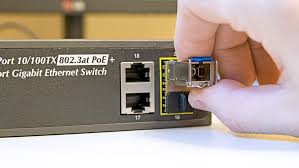
Selecting the right Gigabit transceiver is not simply about matching data rates. Both copper and fiber solutions deliver 1Gbps throughput, yet their behavior in real-world deployments can differ significantly. As networks continue to balance cost efficiency, scalability, and environmental resilience, understanding the differences between electrical and optical interfaces becomes increasingly important. While 10G and higher speeds attract attention, 1G SFP modules remain widely used in access layers, industrial networks, and legacy infrastructure.
Among available 1G SFP modules, two common options are copper-based 1000BASE-T SFP transceivers and fiber-based 1G SFP optical modules such as 1000BASE-SX or 1000BASE-LX. Although both fit into the same SFP slot and provide Gigabit Ethernet connectivity, they rely on fundamentally different transmission media and technologies. Choosing between them requires evaluating distance requirements, environmental conditions, power consumption, and long-term network strategy.
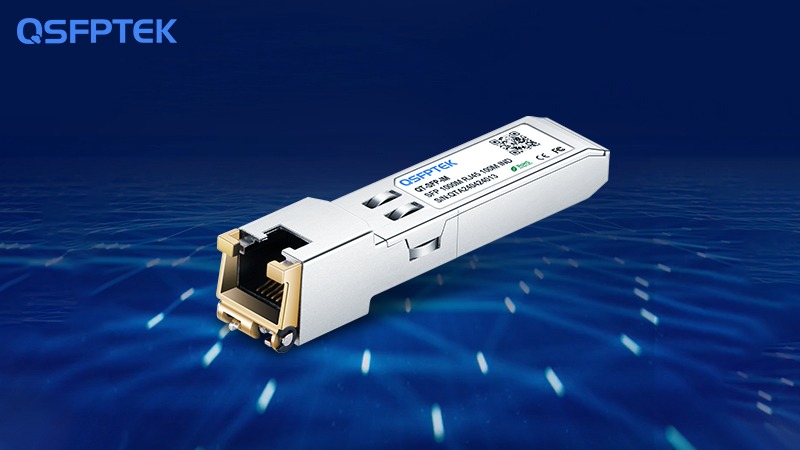
Understanding 1000BASE-T SFP Copper Modules
Electrical Transmission over Twisted Pair
A 1000BASE-T SFP module converts the SFP interface into an RJ-45 copper Ethernet port. It operates over standard twisted-pair cabling such as Cat5e or Cat6 and supports transmission distances up to 100 meters. Unlike optical modules, which convert electrical signals into light, copper SFP modules rely entirely on electrical signaling using advanced digital signal processing to maintain signal integrity across copper conductors.
One of the main advantages of 1000BASE-T SFP modules is their compatibility with existing structured cabling systems. Many buildings and industrial sites already have extensive copper Ethernet infrastructure installed. Deploying a copper SFP module allows network upgrades without replacing cabling. Additionally, 1000BASE-T modules often support auto-negotiation and backward compatibility with 10/100 Mbps devices, making them flexible for mixed-speed environments.
However, copper transmission is more susceptible to electromagnetic interference and attenuation over distance. Although 100 meters is sufficient for most access-layer connections, it is a hard limit defined by the Ethernet standard. In electrically noisy environments, proper shielding and grounding become critical to maintaining stable performance.
Understanding 1G SFP Fiber Modules
Optical Transmission over Single-Mode or Multimode Fiber
In contrast, fiber-based 1G SFP modules transmit data as light signals through optical fiber. Depending on the variant, such as 1000BASE-SX for multimode fiber or 1000BASE-LX for single-mode fiber, transmission distances can range from a few hundred meters to 10 kilometers or more. Optical communication provides superior immunity to electromagnetic interference and significantly lower signal attenuation over long distances.
Fiber modules are particularly suitable for backbone links, campus networks, and inter-building connections where distances exceed the 100-meter limitation of copper. Because optical fiber does not conduct electricity, it also eliminates the risk of ground loops and reduces vulnerability to lightning-induced surges in outdoor deployments. These characteristics make fiber a reliable solution in industrial and high-noise environments.
On the other hand, fiber infrastructure may require higher initial investment, especially if new cabling must be installed. Connector cleanliness, proper termination, and fiber management practices also become essential to ensure consistent performance.
Distance and Deployment Environment
Matching Transmission Media to Network Topology
Distance is often the primary factor when choosing between copper and fiber SFP modules. If the required link length is within 100 meters and existing copper cabling is available, a 1000BASE-T SFP module provides a straightforward and cost-effective solution. It allows seamless integration with traditional Ethernet networks and minimizes installation complexity.
However, when links must extend beyond 100 meters, fiber becomes necessary. Campus backbones, warehouse facilities, and multi-building sites frequently require several hundred meters or multiple kilometers of connectivity. In such cases, fiber modules provide the necessary reach without signal regeneration or additional active equipment.
Environmental conditions also influence the decision. Industrial facilities with heavy machinery or high levels of electromagnetic interference may benefit from fiber’s immunity to electrical noise. Outdoor or geographically separated installations may also favor fiber for safety and reliability reasons.
Power Consumption and Heat Considerations
Operational Efficiency in High-Density Deployments
Another difference between copper and fiber SFP modules lies in power consumption. 1000BASE-T SFP modules generally consume more power than fiber modules because they must perform complex signal processing to maintain reliable transmission over copper cabling. This increased power usage can generate additional heat within the switch chassis.
In high-density switch environments where multiple SFP ports operate simultaneously, cumulative heat output can impact thermal management. Fiber modules, by comparison, typically consume less power and produce less heat. For data centers or edge switches with strict thermal budgets, fiber may offer better energy efficiency.
That said, in low-density industrial deployments, the power difference may not significantly affect overall system performance. The choice should therefore consider the specific operational context.
Cost and Infrastructure Considerations
Evaluating Total Investment
Cost is rarely limited to the price of the transceiver itself. While copper SFP modules may have similar or slightly higher unit costs than some fiber modules, the decisive factor often lies in cabling infrastructure. If copper cabling is already installed and meets performance standards, deploying 1000BASE-T SFP modules avoids additional fiber installation expenses.
Conversely, in new network builds where fiber backbone cabling is planned from the outset, fiber SFP modules may provide greater long-term scalability. Fiber infrastructure supports future bandwidth upgrades more easily, enabling migration to 10G or higher speeds without complete rewiring.
Therefore, the total cost of ownership includes not only hardware but also installation labor, cabling upgrades, maintenance, and future expansion plans.
Reliability and Future Scalability
Preparing for Network Growth
Reliability and scalability should also guide the decision. Copper-based Gigabit connections are reliable for short-distance access links, but their physical limitations restrict future expansion. Fiber, on the other hand, offers greater headroom for bandwidth growth and distance extension.
Organizations anticipating gradual migration to higher-speed backbone connections may prefer fiber to maintain architectural consistency. In contrast, environments focused on stable, localized connectivity without immediate expansion plans may find copper modules sufficient.
Conclusion
Choosing between a 1000BASE-T SFP and a 1G SFP fiber module ultimately depends on distance requirements, environmental conditions, infrastructure availability, and long-term network strategy. Copper SFP modules excel in short-distance deployments where existing twisted-pair cabling can be reused, offering convenience and cost efficiency. Fiber SFP modules provide superior reach, immunity to interference, and stronger scalability for backbone and inter-building connections.
Rather than viewing one option as universally superior, the decision should align with specific deployment needs. By carefully evaluating link distance, operational environment, power considerations, and future growth plans, network designers can select the Gigabit SFP solution that best balances performance, reliability, and cost efficiency.

Basanti Brahmbhatt
Basanti Brahmbhatt is the founder of Shayaristan.net, a platform dedicated to fresh and heartfelt Hindi Shayari. With a passion for poetry and creativity, I curates soulful verses paired with beautiful images to inspire readers. Connect with me for the latest Shayari and poetic expressions.