
MEXQuick Ticket Contract Guide 2026
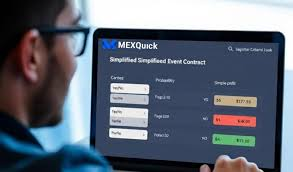
MEXQuick ticket contract represent a significant evolution in crypto derivatives, offering a simplified, fixed-risk structure tailored for short-cycle trading. By 2026, these contracts have surged in popularity among both new and active traders seeking a transparent, time-bound alternative to the complex, sometimes opaque, mechanics of perpetual futures.
MEXQuick operates under verifiable U.S. corporate registrations. MEXQuick INC was incorporated in Wyoming on October 28, 2025, and maintains an active FinCEN Money Services Business (MSB) Registration Number 31000314492672. This registration signifies compliance with U.S. federal financial services requirements, including anti-money laundering protocols.
Ticket Contract on MEXQuick
A Ticket Contract is a streamlined financial instrument that distills trading to a single, time-bound decision. The model is built on a non-negotiable 10-minute duration. Upon entry, the trader selects an asset, chooses a direction (Up or Down), and selects a leverage multiplier. The cost of participation is a fixed entry fee, which is also the trader’s maximum possible loss. This fee is paid upfront and will not be returned regardless of the trade outcome.
The core purpose is to provide direct, high-leverage exposure to very short-term price action without the accompanying risks of traditional leveraged trading. The contract simply settles 10 minutes after opening, comparing the settlement price to the entry price. If the trader’s directional prediction is correct, they receive a payout. If incorrect, they lose only the entry fee.
Why This Contract Type Became Popular in 2026
The rise of ticket contract to mainstream popularity in 2026 can be attributed to several key factors aligning with trader demands.
First, the predictable structure lowered the barrier to entry for beginners. MEXQuick ‘s ticket contract replaces this with a simple proposition: “Here is your maximum cost and risk. Will the price go up or down in 10 minutes?” This clarity reduced cognitive load and allowed new participants to focus on market analysis rather than platform mechanics.
Second, the short-cycle timing is ideal for the modern, active trader. In a fast-moving crypto market, 10-minute cycles align well with intraday volatility and allow for numerous trading opportunities without requiring overnight positions or long-term commitment. It fits into shorter, more disciplined trading sessions.
Third, the controlled downside proved psychologically reassuring. Knowing the exact maximum loss upfront enables precise risk management from the outset, reducing the emotional stress often associated with trading. This fixed-risk model stands in contrast to the potentially unlimited losses possible in certain leveraged spot or futures scenarios.
Finally, transparency became a paramount concern for traders. The explicit formula for entry fees and payouts, coupled with the absence of hidden fees like funding rates, made ticket contract a more transparent alternative to some perpetual futures offerings, contributing significantly to their adoption.
The Mechanics Behind MEXQuick Ticket Contract
Leverage, Entry Fee, and Payout Structure Explained
The financial engine is defined by three interlinked components: leverage, entry fee, and payout. Understanding their relationship is crucial.
Entry Fee Formula
Your entry fee represents the maximum amount you can lose in the trade. It is automatically calculated based on the asset’s price and the leverage you select.
Entry Fee = Asset Price at Entry ÷ Leverage Multiplier
Example :
If Bitcoin is trading at $100,000 and you select 5,000x leverage:
Entry Fee = $100,000 ÷ 5,000 = $20
This $20 is your fixed risk for that single contract.
Payout Logic
Payout are generated only when your prediction (UP or DOWN) is correct at settlement. Profit is derived from the price difference between entry and settlement, amplified by leverage, and limited by your fixed entry fee.
Payout = Entry Fee + (Price Change % × Leverage Multiplier × Entry Fee)
Profit is based on how far the price moved in your predicted direction, multiplied by your effective position size (determined by leverage).
Profitable Scenario (Correct Direction)
Using the same example:
- BTC at entry: $100,000
- BTC at settlement: $100,500
- Price movement: +0.5%
- Leverage: 5,000x
- Entry fee: $20
Because the price increased in your predicted direction, your leveraged position captures that movement. Your total return reflects the amplified gain on top of your entry fee.
Total Payout Example:
$520, meaning:
- $20 → original entry fee returned
- $500 → profit from the price movement
Losing Scenario (Incorrect Direction)
If the final price moves against your prediction, your loss is strictly limited to the entry fee.
Example:
BTC settles at $99,800 (a 0.2% decrease) while you predicted UP.
Your contract finishes out-of-the-money, and you lose only the $20 entry fee.
No additional loss occurs, regardless of how far the market moves.
How Time-Based Cycles Influence Trading Outcomes
The 10-minute cycle is not a static period; its defining characteristic is a dynamic leverage mechanism that evolves linearly as expiry approaches. Leverage multipliers increase over the contract’s lifespan.
- Minutes 1–3 (Lower Multiplier): In the initial phase, available leverage might range from 100x to 1,000x. This is designed for traders who enter based on a new signal or breakout and accept a lower potential multiplier for earlier positioning.
- Minutes 4–7 (Increasing Multiplier): Leverage scales upward progressively.
- Minutes 8–10 (Highest Multiplier): In the final minutes, leverage can reach its peak, often between 6,000x and 10,000x or higher. This rewards traders who enter later in the cycle, often to confirm a trend’s persistence or to capitalize on a last-minute price squeeze.
This structure means patience can increase payout potential. A trader who waits for a clear confirmation at minute 8, then enters with 8,000x leverage, will receive a vastly higher payout for the same 0.5% price move than a trader who entered at minute 1 with 500x leverage. However, the trade-off is reduced time for the price to move in their favor. It encourages strategic timing within the micro-cycle itself.
Disclaimer : All numerical values and leverage ranges in this example are for illustration purposes only. Actual multipliers, pricing behavior, and payout calculations on MEXQuick follow the live engine and may differ based on market conditions.
Step-by-Step Tutorial for Using Ticket Contract
Executing a Ticket Contract trade is a streamlined process. Follow these steps:
1. Choose Asset
Select the trading pair you want to trade, such as BTC/USDT or ETH/USDT.
2. Select Direction (UP or DOWN)
Choose UP if you expect the price to be higher in 10 minutes, or DOWN if you expect it to be lower.
3. Choose Leverage
Select the leverage multiplier available at that moment in the cycle.
Higher leverage lowers your entry fee (your maximum risk) but increases the sensitivity of your position to price movement.
4. Enter Position Size
Specify how much capital you want to commit to this contract. Your entry fee represents your maximum loss.
5. Review Contract Details
Verify the displayed information:
- Entry fee (total risk)
- Leverage
- Direction
Any payout illustration is indicative only; actual settlement depends on the final index price.
6. Confirm Execution
Once you confirm, your entry fee is deducted immediately and the 10-minute fixed countdown begins. Entry price is locked using the aggregated index.
7. Managing the Contract (Early Close or Wait for Expiry)
You can choose to:
Hold until expiry → system performs automatic settlement using the final index price.
Manual early close → exit at the current index price before expiry. If profitable, a 10% settlement fee applies to the profit.
If your prediction is incorrect, your loss remains capped at the entry fee. If no action is taken, the contract settles automatically at the 10-minute mark.
Risk Management for Ticket Contract Traders
Position Sizing Rules for Beginners and Intermediate Traders
The fixed-risk nature of ticket contract makes position sizing straightforward but no less critical.
- For Beginners: Allocate 0.5% to 1% of your total trading capital to the entry fee for a single contract. If you have a $1,000 portfolio, your risk per ticket should be $5-$10. This allows you to withstand a series of losses without significant drawdown.
- For Intermediate Traders: You may increase this to 1% to 2% per contract, but this should be the ceiling. Discipline is key.
- Diversification Within Cycles: Instead of buying 10 tickets on one prediction, consider spreading your risk across multiple, non-correlated predictions (e.g., 2 tickets on a BTC UP, 2 on an ETH DOWN) in different 10-minute cycles. This smooths out volatility in your equity curve.
- The Small-Cycle Advantage: The power of this model lies in taking many small, defined risks rather than one large, unpredictable exposure. Your goal is statistical edge over hundreds of trades, not a life-changing payout on a single 10-minute cycle.
Disclaimer : All numerical values and leverage ranges in this example are for illustration purposes only. Actual multipliers, pricing behavior, and payout calculations on MEXQuick follow the live engine and may differ based on market conditions.
Avoiding Overtrading and Emotional Mistakes
The ease and speed of 10-minute cycles can lead to overtrading. Implement these guardrails:
- Set Daily Limits: Define a maximum number of trades or a maximum total loss limit for the day. Once hit, stop trading.
- Avoid Revenge-Trading: After a loss, do not immediately enter a new contract with higher leverage to “win back” the loss. This is a common path to rapid depletion of capital.
- Structured Sessions: Trade only during your pre-identified high-probability windows (see Advanced Techniques). Do not sit and trade continuously for hours.
- Track and Review: Maintain a trade journal. Record your reasoning, the outcome, and the market context. Regularly review what patterns are working and where your edge lies.
Key Takeaway on MEXQuick Ticket Contract 2026
MEXQuick ticket contract have established themselves as a popular fixed-risk alternative in the 2026 crypto trading landscape by mastering a specific niche: short-cycle, high-clarity exposure. Their appeal lies in the powerful combination of structural simplicity, offering a single binary decision with a known maximum cost, and predictable outcomes, where losses are strictly capped and profits are amplified by a transparent dynamic leverage system.
However, this accessibility does not negate the need for rigorous discipline and proper position sizing. Ultimately, consistent success with ticket contract, as with any trading instrument, is less about chasing extreme multipliers and more about the systematic application of sound risk management, strategic market timing, and clear-eyed pattern recognition.
Important Risk Disclosure and Disclaimer
Contracts trading involves significant risk and is not suitable for all investors. You can lose some or all of your invested capital. Historical results do not guarantee future performance. Only use funds you can afford to lose entirely.
Operating Entity: MEXQuick INC is registered as a profit corporation in Wyoming, USA (incorporated October 28, 2025).
U.S. Regulatory Status: The company maintains an active Money Services Business (MSB) registration with the U.S. Financial Crimes Enforcement Network (FinCEN), Number 31000314492672 (publicly verifiable).
This article is for informational purposes only and does not constitute financial, investment, or legal advice. Always conduct your own due diligence.

Basanti Brahmbhatt
Basanti Brahmbhatt is the founder of Shayaristan.net, a platform dedicated to fresh and heartfelt Hindi Shayari. With a passion for poetry and creativity, I curates soulful verses paired with beautiful images to inspire readers. Connect with me for the latest Shayari and poetic expressions.