
Third Party Payments vs Direct Payment Gateways
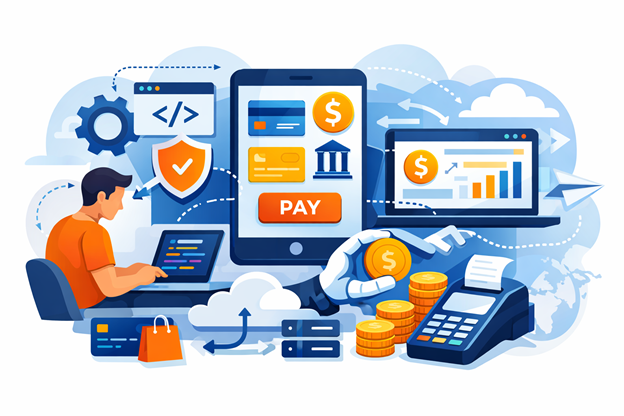
Online businesses must make a critical early decision about how they will accept payments. That decision usually comes down to two main models: third party payments platforms and direct payment gateways. Both approaches allow businesses to process customer payments, but they differ significantly in setup complexity, control, compliance responsibility, cost structure, risk handling, and scalability.
Choosing the right model affects checkout experience, approval rates, fraud exposure, technical workload, and even how fast a company can launch. Startups, e-commerce stores, SaaS platforms, and marketplaces often begin with third party payments, while larger enterprises sometimes migrate toward direct gateway models for greater control and margin optimization.
This in-depth guide compares third party payments vs direct payment gateways across architecture, integration, security, cost, compliance, performance, global reach, and business fit — so you can choose the right path with clarity.
Understanding the Two Models
Before comparing, we need clean definitions.
What Are Third Party Payments Platforms
第三方支付 platforms are full-service payment providers that handle payment processing on behalf of merchants under their own master merchant accounts or aggregated acquiring structure. Businesses integrate with the platform and start accepting payments without opening their own dedicated merchant account relationship with a bank.
Third party payments platforms typically include:
Payment gateway
Payment processor
Fraud tools
Tokenization
Compliance coverage
Settlement handling
Payout management
Subscription tools
Dispute workflows
They are often called “all-in-one” payment providers.
What Is a Direct Payment Gateway
A direct payment gateway is a gateway-only or gateway-plus-processor model where the merchant maintains their own merchant account with an acquiring bank. The gateway provides the technical routing layer, but the merchant is the primary payment entity with the bank relationship.
Direct gateway models usually involve:
Dedicated merchant account
Direct acquiring bank contract
Gateway software layer
Processor connection
Merchant-controlled risk profile
Independent fraud tooling
This model gives more control but requires more setup.
Core Architecture Differences
The most important difference between third party payments and direct payment gateways is where responsibility and ownership sit.
Third Party Payments Architecture
Customer → Third Party Payments Platform → Acquirer → Network → Issuer → Approval
Settlement → Third Party Platform → Merchant Payout
The platform sits between merchant and bank.
Direct Gateway Architecture
Customer → Merchant Gateway → Merchant Acquirer → Network → Issuer → Approval
Settlement → Acquirer → Merchant Bank
The merchant sits directly in the acquiring relationship.
That architectural difference drives most practical differences.
Setup and Onboarding Comparison
Third Party Payments Setup
Third party payments are designed for speed.
Typical onboarding:
Online signup
Basic identity verification
Business category check
Bank account linking
API or plugin integration
Time to live payments: often same day to a few days.
Direct Payment Gateway Setup
Direct gateway models require more steps:
Merchant account application
Underwriting review
Risk assessment
Bank approval
Gateway configuration
Processor connection
Fraud stack setup
Time to live payments: often weeks.
Winner for speed: Third party payments
Compliance and Regulatory Responsibility
Third Party Payments Compliance
Third party payments platforms absorb much of the compliance burden:
PCI scope reduced
Credential storage handled by provider
Fraud systems included
Authentication support built in
Regulatory screening automated
Merchants still have duties — but far less.
Direct Gateway Compliance
Direct gateway merchants carry more responsibility:
PCI compliance scope larger
Fraud tooling often separate
Security controls merchant-managed
More audit exposure
More documentation requirements
Winner for simplicity: Third party payments
Cost Structure Differences
Cost comparison must consider both visible and hidden costs.
Third Party Payments Pricing
Usually:
Percentage + fixed fee per transaction
No setup fee
No monthly minimum (often)
Bundled fraud tools
Bundled reporting
Bundled gateway cost
Higher per-transaction rate but fewer fixed costs.
Direct Gateway Pricing
Usually:
Lower transaction markup
Gateway monthly fee
Merchant account fees
Processor fees
Fraud tool fees
Compliance fees
Statement fees
Lower variable cost but higher fixed overhead.
Startup vs Scale Cost Reality
Low volume → third party payments cheaper
High volume → direct gateway often cheaper
Winner at low volume: Third party payments
Winner at high volume: Direct gateway
Control and Customization
Third Party Payments Control Level
You get:
Standardized checkout flows
Provider fraud models
Provider routing rules
Limited processor choice
Preset risk tolerance
Customization exists — but within limits.
Direct Gateway Control Level
You get:
Custom routing
Processor choice
Fraud vendor choice
Risk rule control
Authorization tuning
Bank negotiation ability
Winner for control: Direct gateway
Risk and Account Stability
Third Party Payments Risk Model
Because accounts are aggregated:
Provider monitors behavior
Funds may be held during reviews
Risk thresholds standardized
Sudden volume spikes can trigger reviews
Lower barrier — but tighter automated controls.
Direct Gateway Risk Model
Because merchant is directly underwritten:
Risk profile known in advance
Volume expectations set
Fewer surprise holds (if within profile)
More predictable treatment
Winner for predictability at scale: Direct gateway
Fraud Management
Third Party Payments Fraud Stack
Usually includes:
Built-in fraud scoring
Global risk models
Device fingerprinting
Behavioral analysis
Chargeback alerts
Good baseline protection included.
Direct Gateway Fraud Stack
Merchant chooses:
Third-party fraud tools
Custom rules
Manual review systems
AI fraud vendors
More flexible but more work.
Winner for plug-and-play: Third party payments
Winner for advanced tuning: Direct gateway
Integration Complexity
Third Party Payments Integration
Options include:
Hosted checkout
Plugins
SDKs
Payment links
Simple APIs
Integration time is short.
Direct Gateway Integration
Often requires:
Gateway API integration
Processor configuration
Fraud tool integration
Token vault setup
Compliance validation
More engineering time required.
Winner for developer speed: Third party payments
Global and Cross Border Support
Third Party Payments Global Support
Often includes:
Multi-currency checkout
Local payment methods
Cross-border routing
Currency conversion
Regional fraud models
Designed for global-first merchants.
Direct Gateway Global Support
Depends on:
Your acquiring bank
Your processor
Your gateway features
Your FX setup
International expansion often requires additional contracts.
Winner for global reach: Third party payments
Settlement and Payout Flow
Third Party Payments Settlement
Flow:
Platform collects funds
Deducts fees
Pays out on schedule
Pros:
Simple
Unified reporting
Multi-currency options
Cons:
Less direct control
Platform payout timing
Direct Gateway Settlement
Flow:
Acquirer settles directly to merchant bank
Pros:
Direct control
Potentially faster at scale
Cons:
More reconciliation work
Subscription and Platform Features
Third Party Payments Feature Breadth
Often includes:
Subscriptions
Invoicing
Payment links
Marketplace splits
Usage billing
Wallet support
All bundled.
Direct Gateway Feature Breadth
Usually requires:
Add-on systems
Separate billing engines
Marketplace payout software
Winner for built-in features: Third party payments
Scalability Considerations
Third Party Payments Scalability
Strong for:
Early growth
Rapid expansion
New markets
May hit limits when:
Margins matter deeply
Routing optimization needed
Custom risk logic required
Direct Gateway Scalability
Strong for:
High volume merchants
Enterprise scale
Optimized margins
Multi-processor routing
Reliability and Redundancy
Third Party Payments Reliability
Large platforms offer:
Global infrastructure
Automatic failover
Network redundancy
But you rely on one provider.
Direct Gateway Reliability
Merchants can build:
Multi-gateway setups
Processor redundancy
Failover routing
More work — more resilience.
When Third Party Payments Are the Better Choice
Third party payments are usually best when:
You are a startup
You need fast launch
You have low to mid volume
You lack compliance resources
You want global coverage quickly
You need built-in subscriptions
You want minimal engineering overhead
You want predictable simple pricing
When Direct Payment Gateways Are the Better Choice
Direct gateway models are usually best when:
You have high transaction volume
You want lower per-transaction cost
You need routing control
You have compliance capability
You want custom fraud logic
You need processor flexibility
You have stable risk profile
Margins are tightly optimized
Migration Path Reality
Many businesses follow this path:
Phase 1 — Start with third party payments
Phase 2 — Grow volume
Phase 3 — Add direct gateway for cost control
Phase 4 — Run hybrid model
Hybrid models are increasingly common.
Hybrid Payment Stack Strategy
Some merchants use:
Third party payments for global/local methods
Direct gateway for core card volume
This balances speed and cost.
Common Misconceptions
Third party payments are not “less secure” — often they are more secure for small merchants.
Direct gateways are not always cheaper — only at sufficient scale.
Third party payments are not only for startups — many large platforms still use them.
Direct gateways are not always faster — integration and routing matter more.
Decision Framework Checklist
Choose third party payments if you want:
Fast setup
Low upfront cost
Built-in fraud tools
Global readiness
Minimal compliance burden
Subscription features
Simple integration
Choose direct gateway if you want:
Lower marginal cost
Acquirer control
Routing flexibility
Fraud stack control
Enterprise scale optimization
Processor choice
Predictable underwriting
Future Trend: Convergence
The gap is narrowing.
第三方支付 platforms are adding more control and routing features.
Direct gateway providers are adding more bundled tools and simplified onboarding.
The future is modular payment stacks.
Final Thoughts
The choice between third party payments vs direct payment gateways is not about which model is universally better — it is about which model fits your current stage, resources, risk tolerance, and growth plans. Third party payments platforms offer speed, simplicity, built-in security, and global capability, making them ideal for startups and growing digital businesses. Direct payment gateways offer control, margin optimization, and customization, making them better suited for large or highly specialized merchants.
Many successful businesses use both models at different stages or in hybrid configurations. The smartest approach is to choose the model that reduces friction now while keeping the door open for optimization later.

Basanti Brahmbhatt
Basanti Brahmbhatt is the founder of Shayaristan.net, a platform dedicated to fresh and heartfelt Hindi Shayari. With a passion for poetry and creativity, I curates soulful verses paired with beautiful images to inspire readers. Connect with me for the latest Shayari and poetic expressions.